Construction and Demolition debris (C&D) is an often over-looked contributor to landfills and waste incinerators.
C&D and bulky waste can be costly for towns to manage and pose health and safety threats to facility operators, including the presence of lead, asbestos, and other harmful materials.
Effectively handling and increasing the recycling and diversion of C&D and bulky waste can help towns decrease costs associated with handling this type of waste, decrease the amount of material landfilled or incinerated, and increase reuse of still-good materials.
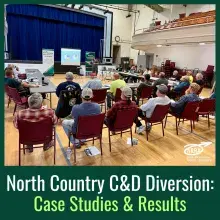
In this C&D Diversion Toolkit, you will find resources for both operators and residents. This work is based off of the 2022-23 Increasing C&D Diversion in Coös County project and the 2023-24 North Country C&D Diversion 2.0 project.
C&D and Bulky Waste Diversion Resources for Operators:
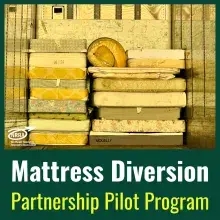
- Mattress Recycling and Disposal Info Sheet(opens in a new tab) - NRRA
- Average Cost Per Ton (Tipping and Trucking): C&D(opens in a new tab) - NRRA
- C&D Summit 1 Overview (2022) (opens in a new tab)- NRRA
- C&D Summit 2 Overview (2023)(opens in a new tab) - NRRA
- Touring C&D Management at Coös County Facilities(opens in a new tab) - NRRA
- North Country C&D Diversion Summit 1 (2023)(opens in a new tab) - NRRA
- North Country C&D Diversion Summit 2 (2024)(opens in a new tab) - NRRA
- VIDEO: C&D Recycling Feasibility Studies Presentation (2024)(opens in a new tab) - NRRA
- North Country C&D Diversion Summit 4 (2024 - final)(opens in a new tab) - NRRA
Feasibility and Case Studies for Operators:
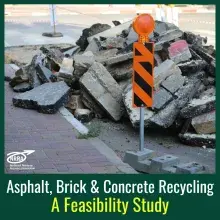
- Asphalt, Brick, and Concrete Recycling in the NH North Country - Feasibility Study Report(opens in a new tab) - NRRA
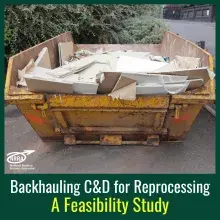
- Backhauling C&D from NH North Country to Reprocessing or Reuse Facility - Feasibility Study Report(opens in a new tab) - NRRA
- Littleton Full Cost Accounting FY2023 Case Study Report(opens in a new tab) - NRRA
- Mattress Diversion Case Study(opens in a new tab) - NRRA
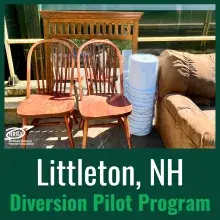
- Littleton C&D and Bulky Diversion Case Study(opens in a new tab) - NRRA
- Lancaster C&D Diversion Case Study(opens in a new tab) - NRRA
Resources for Residents:
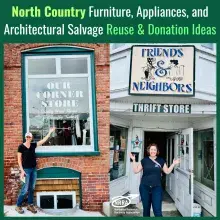
- North Country Bulky Waste Reuse & Donation Ideas Printable Handout (PDF, 129.98 KB)(opens in a new tab) - NRRA
- ‘A whole different animal’: Addressing construction and demolition debris in the North Country(opens in a new tab) - New Hampshire Bulletin
Deconstruction - Information and Resources
Did you know that many building materials could be reused? Here’s how:
Deconstruction is a process that involves carefully taking apart a building to reclaim usable items such as cabinets, fixtures, doors, windows, flooring, and other building materials. For renovation or tear-down projects, there is significant potential for material reuse. You can reuse anything from furniture, cabinets, doors, windows, flooring, or even the lumber that holds up a building. After removal, these materials can then be donated or reused in current or future projects.
Demolition involves tearing down a structure, putting its contents in dumpsters, and hauling it away.
Benefits of Donation: Donation can help save money on disposal costs and qualify for a tax deduction when donated to a non-profit 501(c)3 organization.
Benefits of Reuse: Using reclaimed building materials in new construction or renovations can save money on material costs and help achieve unique designs that are difficult to achieve using new materials.
Create a Plan: A waste management plan can help maximize furniture, equipment, and building material reuse by identifying materials that can be diverted from disposal before the demolition or deconstruction begins.
Find a plan template at: recyclingworksma.com/construction-demolition-materials-guidance
Consider Your Community: Before you begin, identify potential reuse outlets such as local thrift stores, large donation organizations like Habitat for Humanity ReStore, posting to online sites like Craigslist or Facebook, or other organizations and nonprofits such as local schools or community centers.
While full deconstruction involves carefully dismantling a building piece by piece, there are many easy-to-implement methods. This can range from a soft strip, where the most high-value and easy-to-remove materials are removed intact, to a full deconstruction, in which the entire structure is "un-built" to maximize the reuse of existing materials.
Resources for Contractors, Developers, Real Estate Agents, and Homeowners:
Center for EcoTechnology
- https://www.cetonline.org/the-weight-and-impact-of-reuse-building-materials/(opens in a new tab)
- https://www.cetonline.org/using-salvaged-cabinets/(opens in a new tab)
RecyclingWorks
- https://recyclingworksma.com/construction-demolition-materials-guidance/(opens in a new tab)
- https://recyclingworksma.com/furniture-and-equipment-reuse-guidance/(opens in a new tab)
Sustainable Consumption Toolkit
NRRA RESOURCES
The following resources have been created by NRRA in regards to battery recycling. This is a dynamic and up-to-date listing of all battery-related resources.