
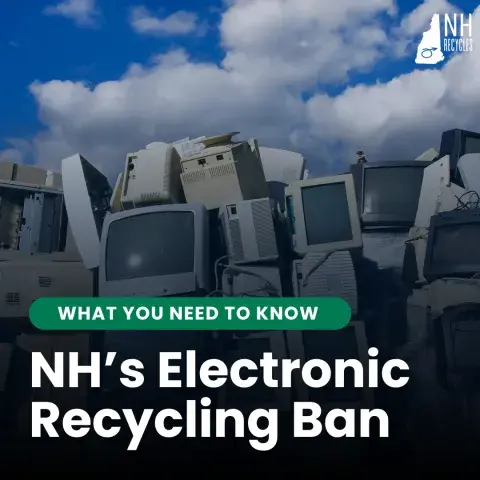
New Hampshire has a statewide electronic recycling ban designed to keep hazardous materials out of landfills and protect the environment. Many common electronic devices contain toxic metals—such as cadmium, lead, mercury, and silver—that can contaminate soil and water if disposed of improperly, posing risks to people and wildlife.
This article breaks down what’s banned, what’s exempt, and what’s recommended for recycling, along with best practices for handling electronics at transfer stations and recycling centers.
Why Electronics Are Banned from Disposal
Electronic devices are complex products made with materials that are either valuable and scarce resources that need to be reserved and reused as much as possible or hazardous to people and the environment. Either way, neither type of material belong in the trash! When electronics are landfilled or incinerated, hazardous metals can leach into groundwater or become airborne. Recycling electronics ensures these materials are safely managed and that valuable metals are recovered and reused.
New Hampshire’s electronics ban supports:
- Environmental protection
- Public health and worker safety
- Responsible materials management
- Proper handling of lithium-ion batteries, which pose fire risks
Quick Reference: Electronic Devices and Disposal
When in doubt, residents should talk to their transfer station operator; operators can contact NH Recycles Member Services or NHDES for guidance.
Download the Quick Reference Guide (PDF, 156.56 KB)(opens in a new tab)
BANNED FROM DISPOSAL Must be recycled | EXEMPT ITEMS* Not considered electronic devices unless removed from larger equipment | RECOMMENDED FOR RECYCLING |
|---|---|---|
Computers, laptops, monitors, tablets | Motor vehicles and parts | Routers |
Keyboards, mice, external hard drives, etc. | Electronics that are part of industrial, governmental, commercial, or R&D equipment | Electronic typewriters |
Computer Speakers | Security, sensing, border control, or counterterrorism equipment | Radios |
Printers and Copiers | Monitoring, diagnostic, or control equipment | Calculators |
Fax machines | Commercial medical equipment with integrated video display | Digital cameras |
Video Display Devices | Electronics within major appliances: | Remotes |
Video Recording/Playback Devices (e.g. DVD players, VCRs, DVRs) | Clothes washers and dryers | Electronic scales |
Cordless phones | Refrigerators and freezers | Alarm clocks |
Cell phones | Microwaves | Controllers |
Any item containing a lithium-ion battery, when the battery cannot be easily removed. (If the battery can be easily & safely removed, only the lithium-ion battery must be recycled.) | Conventional ovens/ranges | Battery-powered items |
Dishwashers | Vacuums | |
Room air conditioners, dehumidifiers, | Coffee makers | |
Exercise equipment | Clocks | |
Fans | ||
Earphones & Headsets (including Bluetooth) | ||
Hair dryers |
*Items may fall under more than one NH disposal ban, including the wet-cell battery ban, mercury containing devices ban, and the lithium-ion battery ban. Please check all regulations prior to disposal.
Banned Electronic Devices
The following items may not be disposed of in the trash or landfill in New Hampshire and must be recycled properly:
Electronic Devices Covered by the Ban
- Computers, laptops, monitors, tablets
- Computer peripherals (keyboards, mice, external hard drives, speakers)
- Printers, copiers, fax machines
- Video display devices (TVs, projectors, CRT devices)
- Video recording and playback devices (DVD players, VCRs, DVRs)
- Wireless telephones (cordless phones, cell phones)
- Any item containing a lithium-ion battery
Exempt Items
The following items are not considered electronic devices under the ban, unless removed from larger equipment:
Exempt Categories
- Motor vehicles and vehicle parts
- Devices that are part of larger equipment used for:
- Industrial, governmental, commercial, or R&D settings
- Security, sensing, border control, or counterterrorism
- Monitoring, diagnostic, or control systems
- Commercial medical equipment with integrated video displays
Electronics Embedded in Appliances
- Clothes washers and dryers
- Refrigerators and freezers
- Microwaves and conventional ovens/ranges
- Dishwashers
- Room air conditioners, dehumidifiers, and air purifiers
- Exercise equipment
Recommended for Recycling
While not explicitly banned, these items should still be recycled whenever possible:
- Routers
- Electronic typewriters
- Radios
- Calculators
- Anything that runs on a battery (even if the battery has been removed)
- Digital cameras
- Remotes
- Electronic scales
- Alarm clocks
- Game controllers
These items are commonly accepted by electronics recyclers with minor preparation:
- Vacuums (remove bag and debris)
- Coffee makers (remove carafe)
- Clocks (remove glass face)
- Fans
- Earphones and headsets
- Hair dryers
Proper Storage and Handling at Facilities
To protect staff, the public, and equipment, electronic devices should be handled carefully at transfer stations and recycling centers:
- Store electronics under cover, protected from rain and snow
- Use a clearly marked, designated storage area
- Prevent breakage, especially of screens and batteries
- Keep lithium-ion battery devices intact and separated when possible
Good storage practices reduce fire risk, limit environmental exposure, and make recycling safer and more efficient.
Learn More
- Additional guidance from the New Hampshire Department of Environmental Services.(opens in a new tab)
- The law governing the electronics disposal ban: RSA 149-M:27(opens in a new tab)
Need Help?
NH Recycles works with communities across New England to help navigate electronics recycling requirements, identify responsible vendors, and improve on-site handling practices. If you have questions about compliance, storage, or recycling options, reach out to the NH Recycles Member Services team for assistance.
- This material is based upon work supported under a grant by the Rural Utilities Service, United States Department of Agriculture. Any opinions, findings, and conclusions or recommendations expressed in this material are solely the responsibility of the authors and do not necessarily represent the official views of the Rural Utilities Service.