
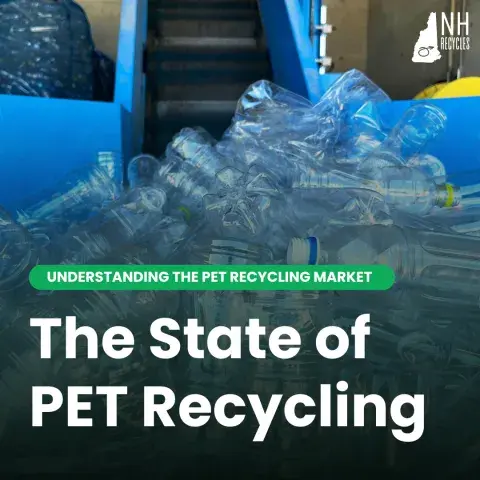
Understanding the PET Recycling Market
Recycling PET plastic bottles (e.g. #1 clear plastic water bottles) remains an important part of many community recycling programs. However, the PET market is facing real challenges, and prices have been falling for more than a year. These issues affect towns across the region, and understanding what’s happening can help residents and local officials make informed decisions.
Once collected, PET bottles are cleaned and processed into flakes or pellets. These materials are then turned into new products, including clothing, carpeting, insulation for coats and sleeping bags, and even new bottles.
What’s Affecting the Market?
1. Cheaper recycled PET from overseas continues to undercut U.S. mills.
2. Large amounts of low-cost virgin (new) PET are being imported as well.
3. Recent tariff changes have not yet shifted buying patterns.
4. Two major PET recycling mills in the eastern U.S. recently closed, shrinking available outlets, especially in the northeast.
How This Impacts Communities
These market changes affect more than just programs that bale PET bottles. Communities handling mixed plastics or commingled recycling may also see increased costs. New Hampshire, which does not have a bottle bill, may experience a higher impact due to greater PET volume in its recycling stream.
Should We Stop Recycling PET?
No. PET recycling remains important. Communities can support stronger markets by following recycling guidelines, keeping materials dry, producing standard bales, and being patient as the market evolves.
If you need storage, please consider looking at our grant page for available grants. One easy grant to apply for is the New Hampshire the Beautiful(opens in a new tab) equipment grant.
The Bottom Line
The PET market is under pressure, but continuing to recycle PET—while improving quality and handling—helps ensure communities maintain strong, sustainable recycling programs.