
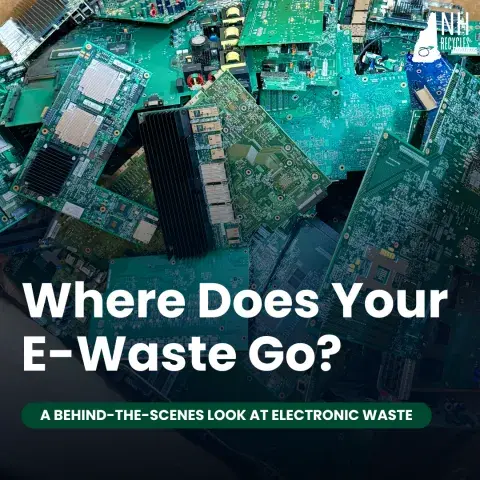
A Visit to North Coast Services - a TerraCycle company
Ever wonder what actually happens to your electronics after they leave your transfer station? This March, we had the chance to tour North Coast Services to follow that journey—and to get a closer look at how materials are handled, sorted, and safely recycled.
We met with their team and walked through the process from start to finish. Here’s what stood out.

NH Recycles members joined North Coast's team and NH Recycles' Municipal Recycling Advisor for a personal tour of the facility.
From Pickup to Processing

Once materials arrive at the facility, everything is:
Unloaded
Sorted and segregated by type
Weighed and recorded
Entered into a sales order (your invoice)
It’s a hands-on process, and accuracy matters at every step.
Does Sorting Matter?
Short answer: yes—but don’t let perfect be the enemy of good.
If your facility is able to separate items like:
- Computer towers
- Computer screens
- Miscellaneous electronics
…it makes things easier and faster on the processing end. That can translate to better pricing and lower labor costs for your community.
That said, if you can’t sort everything, North Coast can handle mixed loads. More sorting helps, but it’s not a barrier to participation.


Sorting items BIG and small, including computer monitors and very thin tubes from flat screen TVs.
The Hidden Challenge: Batteries
One of the biggest takeaways from the tour? Batteries are everywhere.
Several attendees were surprised to learn they had been shipping batteries without realizing it—because many are embedded inside electronics.
This is where careful handling becomes critical:
Do not send fuel-containing lithium lighters with electronics. These are considered hazardous waste - because of the fuel - and should go to a Household Hazardous Waste (HHW) collection.
Only use clear tape to cover battery terminals—never duct tape. Duct tape can be conductive (that's bad!)


Here are some great examples of taped battery terminals!
Inspect incoming materials for embedded batteries whenever possible. Make sure to pay special attention to your scrap metal and electronics piles - hidden lithium-ion batteries are EVERYWHERE!


What to Do with Damaged Batteries
If you come across a damaged, defective, or recalled (DDR) battery:
- Place it in a DDR kit if you have one
- If not, use a metal container with sand
- Store it away from buildings and other materials
The goal is simple: contain the risk before it becomes a fire.
What Happens Next?
After initial processing:
- Batteries are sent to specialized facilities for dry shredding
- Mercury-containing lamps are recycled in Massachusetts
- Electronics are broken down and sent to vetted downstream vendors
North Coast is both R2 certified and part of the e-Stewards network, meaning they track materials all the way to their final destination. All e-waste remains within the United States, with full downstream accountability.
They also offer:
- NAID-certified data destruction for hard drives
- Secure handling of sensitive materials
- Ongoing audits to ensure compliance and safety
Built for Safety

Since their previous battery fire, North Coast has taken additional steps:
A dedicated battery room with its own fire alarm.
Physical separation from the rest of the facility - full lithium-ion battery buckets are now stored in a container separate from the main building.
Nighttime containment measures to reduce risk - the room where batteries are kept is sealed off from the rest of the building each night.
It’s a strong example of how facilities are adapting to the growing challenges of lithium-ion batteries.
Why This Matters
Tours like this reinforce something we talk about often: recycling doesn’t end when materials leave your site.
The way materials are sorted, handled, and shipped upstream directly impacts:
- Safety
- Cost
- Recycling outcomes
And it’s why NH Recycles puts so much emphasis on vetting vendors and building strong partnerships.
If you’re looking to move electronics or have questions about setup, reach out—we’re here to help make it practical, reliable, and safe.
Because when it comes to recycling, knowing where your materials go—and how they’re handled—makes all the difference.
