
(like this post?) Share on Facebook
The Long Version:
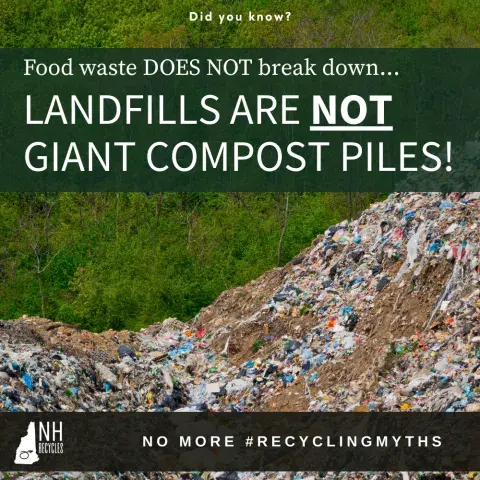
LANDFILLS ARE NOT GIANT COMPOST PILES 🚫🌱
Americans generate about 4.9 pounds of trash per person every day — that adds up to nearly 300 million tons a year. 🤯 (Source: EPA)
But here’s the surprise:
That waste doesn’t magically break down once it hits the landfill.
Landfills aren’t designed to “decompose” waste — they’re designed to store it. Trash breaks down very slowly in a sealed, oxygen-free environment. And without oxygen, bacteria produce methane gas, which is:
- Highly flammable
- Dangerous if it builds up
- A powerful greenhouse gas that contributes to climate change
What about biodegradable bags or food scraps tossed in the trash, hoping they’ll break down?
Still no. Without oxygen, microorganisms, and space to breathe, even compostable materials just sit there.
That’s why recycling and composting matter.
Keeping recyclables and food waste out of landfills reduces methane, saves space, and puts materials to better use.
Want to learn more about how landfills actually work? 👉 https://science.howstuffworks.com/environmental/green-science/landfill.htm(opens in a new tab)
The Short Version:
MYTH vs. FACT: LANDFILLS & WASTE
❌ MYTH: Landfills are basically giant compost piles.
✅ FACT: Landfills are designed to store waste — not break it down.
❌ MYTH: Trash decomposes quickly once it’s buried.
✅ FACT: In landfills, waste breaks down very slowly in a sealed, oxygen-free environment.
❌ MYTH: Biodegradable bags and food waste will decompose in the trash.
✅ FACT: Without oxygen, space, and active microorganisms, even compostable materials don’t properly break down in landfills.
❌ MYTH: Landfills are harmless once waste is buried.
✅ FACT: Oxygen-free decomposition produces methane gas — a flammable, dangerous gas and a powerful contributor to climate change.
👉 BOTTOM LINE:
Recycling and composting keep valuable materials out of landfills, reduce methane, and protect our environment.
This material is based upon work supported under a grant by the Rural Utilities Service, United States Department of Agriculture. Any opinions, findings, and conclusions or recommendations expressed in this material are solely the responsibility of the authors and do not necessarily represent the official views of the Rural Utilities Service. Rural Community Assistance Partnership, Inc., is an equal opportunity provider and employer.