
NHDES Credits: 1
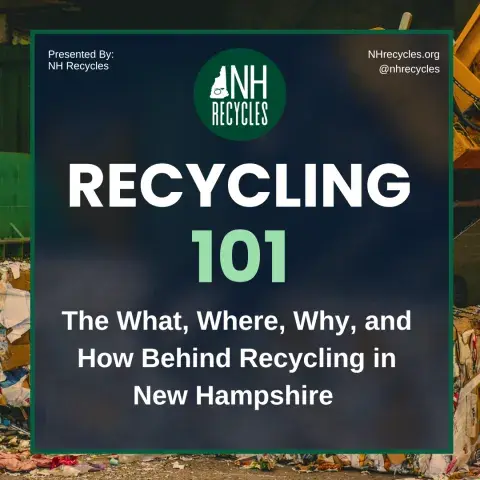
About the Recycling 101 Presentation
The Recycling 101 presentation featured in this video was recorded during the October 2025 Recycling Summit and reflects NH Recycles’ most current education content at the time of recording. The presentation is periodically reviewed and updated to incorporate changes in recycling markets, policies, and best practices.
NH Recycles first developed Recycling 101 in August 2022 with support from a grant awarded by the United States Department of Agriculture Rural Utilities Service as part of our Recycling Tools of the Trade project. This project was designed to help address the unique solid waste and recycling challenges faced by small, rural communities across New Hampshire.
Since its launch, Recycling 101 has been refined and delivered to dozens of operators, municipalities, decision-makers, and community groups statewide.
The Recycling 101 presentation is designed to help operators and residents better understand:
- An overview of trash and disposal trends in the U.S. and New Hampshire
- Recycling basics and commonly accepted materials
- What happens to materials after they are recycled—and what they can become
- How recycling works in New Hampshire
- Key challenges facing the state’s solid waste system and potential solutions
- Practical next steps the state, municipalities, and residents can take to make a meaningful difference
Video:
RECOMMENDATION: share the presentation in video format with a follow-up question and answer section with local transfer station operators to answer community-specific questions that residents may have.
This presentation is free and designed to be shared! Communities are welcome to download a PDF version of the Recycling 101 presentation, available in both a slide-only format and a version that includes presenter notes.
View the Recycling 101 Slides (PDF, 24.39 MB)(opens in a new tab)
View the Recycling 101 Slides & Notes (PDF, 29.44 MB)(opens in a new tab)
- This material is based upon work supported under a grant by the Rural Utilities Service, United States Department of Agriculture. Any opinions, findings, and conclusions or recommendations expressed in this material are solely the responsibility of the authors and do not necessarily represent the official views of the Rural Utilities Service. Rural Community Assistance Partnership, Inc., is an equal opportunity provider and employer.