
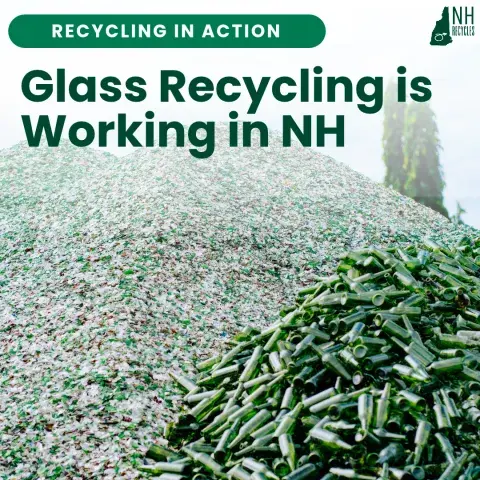
Glass recycling is alive and well in New Hampshire. From new bottles and jars to materials used in construction projects, there are established outlets for recycled glass, and NH Recycles is helping communities put millions of pounds of it to good use each year.
Through NH Recycles, communities have three options for recycling their glass. Clean glass can be recycled into new bottles and jars, insulation, and pool filtration material. Glass can also be processed into a sand-like material for pipe bedding and septic systems, or crushed into aggregate for local construction projects. Each option provides a valuable outlet for collected glass.
The best fit depends on the community. Transportation costs, equipment, available space, staffing capacity, and the time needed to keep glass free of unwanted materials all shape a town's decision. Because glass is heavy, finding a practical route from collection to its next use is an important part of the process.
From Bottles and Jars to New Products
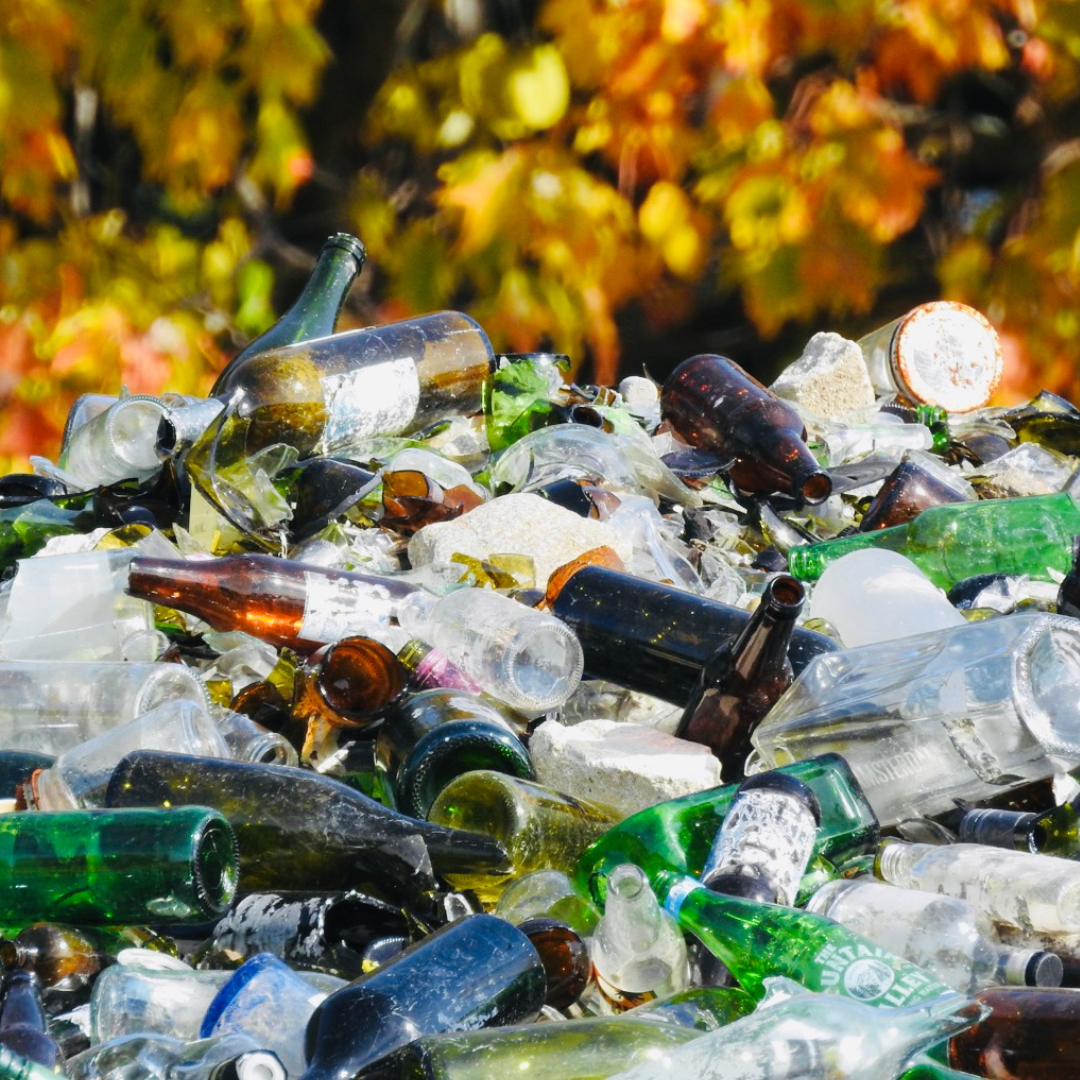 Recycling glass into new bottles and jars starts with a clean collection. Ceramic mugs and drinking glasses can cause serious problems for facilities processing glass into new containers. Helping residents understand what belongs in this collection is an important step toward keeping unwanted materials out.
For towns able to collect 15 to 30 tons of clean glass and load a truck, NH Recycles can arrange transportation at no cost to a recycling facility in Canada, where the glass can be turned into new bottles and jars, insulation, and pool filtration material. This provides a valuable outlet for collected glass while helping participating communities keep recycling costs low.
Maintaining a clean glass collection does require additional attention from residents and transfer station staff. New Hampshire also currently has one consolidation point for smaller communities able to collect clean glass, making transportation and loading capacity important considerations. For communities with the equipment, space, and staffing to maintain a clean collection, however, the savings can add up.
Recycling Glass into Sand
Another option is to collect glass for processing into a sand-like material(opens in a new tab). Through NH Recycles, participating communities can send collected glass to a processor, where it is crushed and washed to produce material suitable for applications such as pipe bedding and septic systems.
Unlike clean glass recycling, this approach does not require glass to meet the same strict collection standards for manufacturing new containers. This can make it a practical alternative for towns that lack the staffing or space to maintain a separate clean glass collection.
Transportation and processing costs are still important considerations, but this option provides another established outlet for collected glass, turning it into a useful material for construction applications.
Putting Processed Glass Aggregate to Work Locally

For towns with suitable construction projects, PGA can provide a valuable local use for collected glass. Wilmot recently used crushed glass around its new recycling building, and Loudon had its glass pile crushed for use in a construction project.
Although processing costs and state regulations governing the use of PGA must be considered, this approach offers another way for communities to put collected glass to work. Identifying an appropriate use for the material is an important part of planning, particularly because regulations can limit its use in non-municipal projects.
Nearly 9.5 Million Pounds of Glass Recycled
The results demonstrate that glass recycling is more than just a possibility. Last fiscal year, approximately 30 NH Recycles member towns across New Hampshire, Massachusetts, and Vermont recycled nearly 3.5 million pounds of clean glass. More than 50 member towns also recycled around 6 million pounds of glass into aggregate.
Together, that's nearly 9.5 million pounds of glass kept in use through NH Recycles programs in just one year.
Glass recycling isn't one-size-fits-all, but New Hampshire communities have real options. Whether a town is collecting clean glass for manufacturing into new products, sending glass for processing into sand, or using crushed glass in local construction projects, there are established outlets that give this material a useful second life.
The right approach depends on each community's budget, geography, equipment, staffing, and goals. NH Recycles' Member Services team can help member communities explore their options and find an approach that works for their facilities and residents.