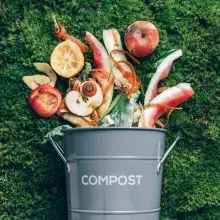
Food waste accounts for 24% of municipal solid waste (EPA, 2018). Food scrap composting has become easier in NH with changes to municipal and commercial composting regulations.
Food scrap composting saves economic and environmental resources, as food waste is diverted and does not end up in a landfill or incinerator.
Check out our Composting & Food Waste Diversion Map to find services near you!
In this Composting Toolkit, you will find the basics for municipal food scrap composting in a video and a printable resource, several resource links for operators, helpful articles to share with residents, and case studies.
(Video should load shortly or watch the Municipal Food Scrap Composting Toolkit Video on YouTube)(opens in a new tab)
Need help or have a question? Reach out to our Member Services team by email(opens in a new tab) or by calling: 603-736-4401
Printable Food Waste Composting Best Management Practices (NHDES)(opens in a new tab)
Key Takeaway: a municipal compost program can be a cost-effective way to divert food scraps and decrease municipal solid waste.
WHAT TO DO
There are several type of food scrap diversion options a municipality can utilize, including:
- On-site composting where a transfer station receives AND processes food scraps into compost on transfer station grounds.
- Off-site composting where a transfer station collects food scraps on-site and then transfers them to another facility to be processed into compost.
- Off-site composting with a non-solid waste facility community collection center.
- Curbside collection by contracted food scrap haulers to be processed either on or off site at the transfer station.
MUNICIPAL COMPOSTING RESOURCES
On-site composting at a transfer station is also known as "community composting" - larger scale than home composting but smaller than commercial or industrial composting. Municipalities interested in on-site composting will find a variety of resources here.
Start Here: Food Waste Diversion and Composting Workshop Series(opens in a new tab)
- How to Start a Municipal Food Scrap Diversion Program(opens in a new tab) - Created by the Upper Valley Lake Sunapee Regional Planning Commission
- Financial Considerations for Municipal Food Scrap Recovery(opens in a new tab) - Created by the Upper Valley Lake Sunapee Regional Planning Commission
- Municipalities have had success partnering up to divert food scraps, with multiple municipalities collecting food scraps and sending them all to one municipality to be composted.
- Solid Waste District Adds Four Towns to Composting Program in Franklin County, MA(opens in a new tab) - WasteAdvantage Magazine
- Model Food Scrap Composting(opens in a new tab) - Northeast Recycling Council (NERC)
- Compost Calculator(opens in a new tab) - designed to develop balanced compost recipes with a diverse range of feedstocks. Created by Green Mountain Technologies.
- Compost Troubleshooting (PDF, 75.16 KB)(opens in a new tab) - designed by NERC, this table answers common issues that can arise when composting, such as the pile being too wet, too dry, smelly, is heating up too much, or isn't hot enough, plus several more issues operators may face when composting on-site.
- Organic Materials Management & Composting for Rural, Small, and Tribal Communities (PDF, 2.05 MB)(opens in a new tab) - created by the Northeast Recycling Council. This guide was designed to assist decision makers, solid waste staff, citizen activists, and others in developing and expanding yard debris, food scrap, and other organics management strategies.
- Jump to page 41 to view the Centralized Composting section, which includes (but is not limited to):
- The Composting Process and Recipe Development
- Composting Technology and Methods
- Siting Parameters, site selection, design, drainage, and opportunities
- Staffing, Training, Health, and Safety
- Equipment, Tools, and Monitoring
- Jump to page 41 to view the Centralized Composting section, which includes (but is not limited to):
- Centralized Composting Operation Best Management Practices (PDF, 12.89 MB)(opens in a new tab) - part of a NERC presentation on Food Scrap Management. Images and text all about setting up an on-site municipal composting program, including different types of composting (windrows or aerated static piles), information on siting and financing, staff training, equipment, and more.
- Food Scrap Collection (PDF, 9.06 MB)(opens in a new tab) - part of a NERC presentation on Food Scrap Management. Images and text focused on collection options and containers.
- Community Composting Done Right: A Guide to Best Management Practices(opens in a new tab) - Created by the Institute for Local Self-Reliance
- Municipalities with Composting Programs in NH and VT(opens in a new tab) - NH Recycles Resource Page
- What's Your Ideal Composting Recipe?(opens in a new tab) - Following these instructions from Biocycle, and using an app to help with the calculations, will hopefully save you months of experimentation.
COMMERCIAL COMPOSTING RESOURCES
Municipalities interested in off-site composting should reach out to a vendor or farm in their area for more information.
- Collection and On-Farm Composting for Municipalities(opens in a new tab) - Created by the Upper Valley Lake Sunapee Regional Planning Commission
- Food Composting & Diversion Services(opens in a new tab) - NH Recycles Resource Page, includes food waste pick-up vendors and local farm partners.
- Vermont Food Scrap Haulers(opens in a new tab) - List of permitted food scrap haulers in Vermont, some may also service NH.
GENERAL COMPOSTING RESOURCES
- Food Scrap Diversion and Composting(opens in a new tab) - resource page covering household, school, and municipal composting. Created by the Upper Valley Lake Sunapee Regional Planning Commission.
- Municipal Composting of Yard Waste(opens in a new tab) - Environmental Fact Sheet created by NHDES, contains helpful information about processing of compost in windrows.
- Backyard & Small Scale Composting (PDF, 2.56 MB)(opens in a new tab) - part of a NERC presentation on Food Scrap Management
- Resident Education on Municipal Food Scrap Composting (PDF, 2.56 MB)(opens in a new tab) - part of a NERC presentation on Food Scrap Management
- On-Farm Composting Toolkit(opens in a new tab) - Composting Association of Vermont, contains helpful information for farms to start or improve a composting program
- Community Compost Bin Sale(opens in a new tab) - Recycling Connections coordinates an annual ‘bulk’ purchase of the Home Composter™ compost bins on behalf of municipalities, organizations or groups interested in selling compost bins as a way to promote backyard composting and assist with climate or other sustainability goals. The Home Composter™ is only available through non-profit/municipal organizations, it is not sold at retail stores.
NH PERMIT & STATUTORY RESOURCES
- New Hampshire Food Waste Policies(opens in a new tab) - ReFED
- Policy Toolkit: Develop Effective Policy to Keep Food Scraps Out of Landfill and Scale Composting Infrastructure(opens in a new tab) - Closed Loop Partners
- Permitting Options for Municipal Food Scrap Diversion Programs in NH(opens in a new tab) - NHDES
- Composting Facility Requirements(opens in a new tab) - NH Code of Administrative Rules
- Self-Inspection Checklist: Food Composting(opens in a new tab) - NHDES
- New Compost Facility Rules in NH(opens in a new tab) - NH Recycles
HELPFUL ARTICLES
- Community Composting Keeps Growing!(opens in a new tab) - NERC
- Municipal Compost Conversation Stirs Interest at NRRA Member Operations & Marketing Meeting(opens in a new tab) - NH Recycles
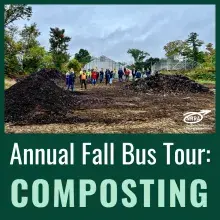
- Composting Bus Tour of New Hampshire(opens in a new tab) - NH Recycles
CASE STUDIES
- See how Lebanon, NH and New London, NH (opens in a new tab)have implemented food scrap composting in their respective communities.
NH Recycles Resources
The following resources have been created by NH Recycles related to composting. This is a dynamic and up-to-date listing of all composting-related resources.