Every year, fires caused by improper battery disposal cost over 1.2 billion dollars and threaten the lives of hundreds of waste, recycling, and scrap operators!
Properly disposing of your batteries saves money and lives, by lessening the chance of a fire breaking out at a facility.
In this Batteries Toolkit, you will find the basics for disposing of batteries in a video and a printable resource, several resource links for operators, resources to share with residents, and case studies.
Key Takeaway: BAG individual batteries or securely TAPE the terminals to prevent accidental fires and RECYCLE all batteries!
(the only exception is single-use batteries, which can be taped and put in with regular household trash)
WHAT TO DO
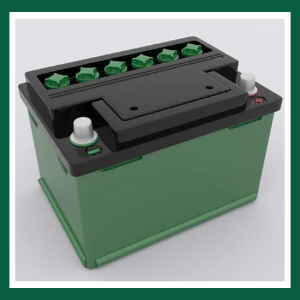
Batteries that must be recycled are a danger to the environment. When it comes to battery disposal, it’s always best to play it safe. Click on the battery type below to view an image of the battery, how to properly dispose of it, and other resources for operators and residents.
HOUSEHOLD non-rechargeable single use alkaline and carbon zinc batteries:
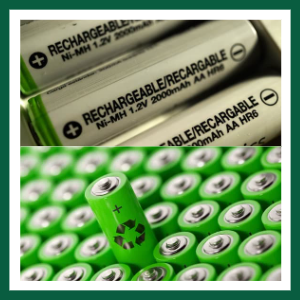
Household non-rechargeable batteries include AA, AAA, C, D and 9-volt batteries that cannot be recharged.
Tape the ends and then ok to go into the regular trash
You can recycle these batteries for free in some states (yes in Vermont, no in New Hampshire, Maine, or Massachusetts). Otherwise, you will need to pay to send in single use batteries for recycling through The Battery Network or Waste Management(opens in a new tab).
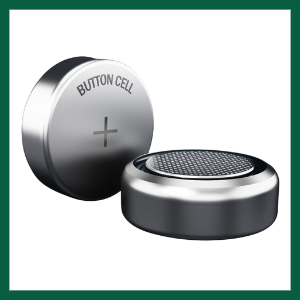
Rechargeable batteries include rechargeable household batteries, button cell batteries, and lithium-ion batteries.
For operators:
Batteries should be taped over the terminals or individually bagged to prevent accidental fire.
NH Recycles' electronic recycling vendors will take batteries when they come and pick up your electronics. Their prices do vary by battery type (chemistry) and by vendor. You can also reach out to Call2Recycle(opens in a new tab), a well known battery recycler, to set up a battery recycling program if you do not yet have one.
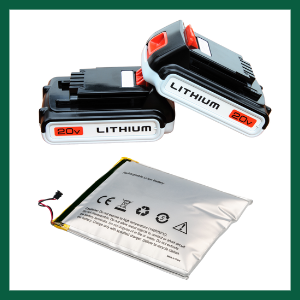
LITHIUM POLYMER and LITHIUM ION BATTERIES: DO NOT TRASH - recycle!
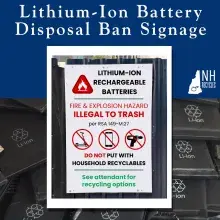
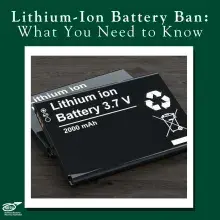
In NH it is illegal for anyone to throw Lithium-Ion batteries in the trash! These batteries pose a HUGE FIRE & SAFETY HAZARD.
For operators:
Batteries should be taped over the terminals or individually bagged to prevent accidental fire.
NH Recycles' electronic recycling vendors will take batteries when they come and pick up your electronics. Their prices do vary by battery type (chemistry) and by vendor. You can also reach out to Call2Recycle(opens in a new tab), a well known battery recycler, to set up a battery recycling program if you do not yet have one.
Recycled Materials Association (ReMA) and The Electrical Safety Foundation (ESF) partnered on a campaign to promote lithium-ion battery recycling. The goal of the campaign is to educate the public on how to purchase, use, and recycle lithium-ion batteries safely: