Prevent contamination and protect groundwater at the transfer station.

Check out the Andover Scrap Metal and HHW Case Study(opens in a new tab).
Common Contaminants in Scrap Metal
Learn about recommended best practices for handling your scrap metal to ensure these contaminants stay out!
What Happens to Your Metal?
Most transfer stations collect scrap metal as a commodity called light iron. Light iron is basically thin (usually less than 1/8 inch thick) magnetic metal that may contain a small amount of non-metallic material.
In most cases, light iron is either baled, sent to a shredder, or both. Shredding serves two main purposes: it helps remove non-metal materials, such as cloth and plastic, and it densifies the metal, so it is easier to transport and prepare for recycling.
For example, Radius Recycling bales material at its Concord, New Hampshire facility and then ships it to its shredder in Everett, Massachusetts.
WTE Recycling operates a shredder at its facility and ships much of its processed material by rail.
Smaller scrap yards typically accumulate enough material to ship full truckloads to a larger facility for further processing.
Groundwater Contamination
Scrap metal can create groundwater contamination risks when fluids, chemicals, metals, or other contaminants leak onto the ground and are carried by rain or snowmelt into soil and groundwater. The main areas of concern are outlined below.

Best practices: While it may not be possible to eliminate every potential source of groundwater contamination, transfer stations can greatly reduce risk by using consistent handling and storage practices.
- Store scrap metal on a concrete or paved surface whenever possible.
- Inspect incoming loads and remove items of concern before they enter the scrap metal pile or container.
- Train staff to identify problem materials, including fluids, batteries, electronics, compressed gas cylinders, and refrigerant-containing units.
Oil, Gas, and Paint, Oh My!

These materials create two major concerns:
- Fire risk: Flammable liquids and vapors can ignite during handling, storage, transportation, or processing.
Groundwater contamination: Leaking fluids can soak into the ground or be carried by rain and snowmelt into soil and groundwater.
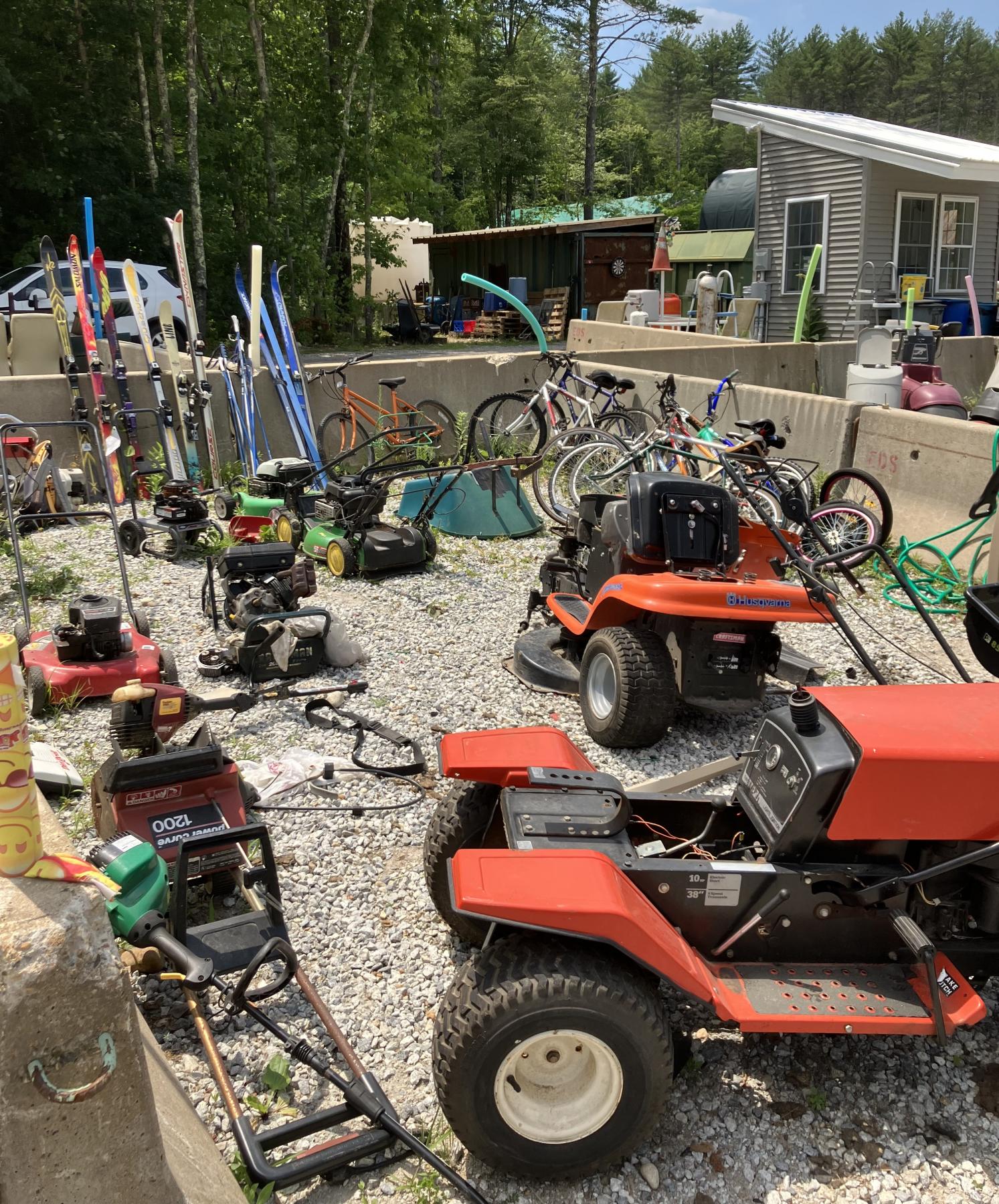
Separate lawn mowers and other motorized equipment from your scrap metal.

Items to inspect: Staff should inspect all items that may have contained gasoline, oil, paint, or similar materials before they are accepted as scrap metal.
- Lawn mowers
- Weed trimmers
- Snowblowers
- Rototillers
- Other small engines or equipment that may contain fuel, oil, or other fluids.
After inspection: Items that have been checked and cleared should be marked with spray paint. This helps scrap yard inspectors quickly identify items that are safe and ready to process.

It's important to collect used oil, gasoline, paint, and other automobile fluids separately from your scrap metal.
Batteries: The New Threat

Batteries create two major concerns for transfer stations, scrap yards, material recovery facilities, and collection vehicles:
- Fire risk: Lithium-ion batteries and other rechargeable batteries can ignite during handling, transportation, or processing, especially if they are punctured or crushed.
- Environmental risk: Batteries may contain metals or chemicals that can create contamination concerns if they leak or are managed improperly.
Battery types to watch for: Staff should be alert for all types of batteries, not just lithium-ion batteries. Common types include alkaline, nickel-cadmium, nickel-metal hydride, lithium, lithium-ion, and lead-acid batteries.
Inspection guidance: Any item that could contain a battery should be checked before it is accepted as scrap metal. If the battery can be safely removed, remove it and manage the battery through the proper battery recycling program. If the battery is built in and cannot be removed, the entire item should be managed through the electronics recycling program.

Items to inspect:
- Lawn equipment, such as trimmers and battery-powered tools
- Power tools, such as drills and saws
- Scooters and hoverboards
- Vacuums
- Grills, which may contain a battery in the ignitor switch
To learn more about battery and fire safety, check out our
Solid Waste Safety Toolkit(opens in a new tab)

Examples of collection and storage methods for different battery types. It's important to separate batteries from the waste stream and keep them protected from the elements.
Compressed Gas Cylinders

Compressed gas cylinders create two major concerns:
- Explosion risk: Cylinders may contain propane, oxygen, argon, nitrogen, or other gases under pressure. If damaged, heated, crushed, or processed improperly, they can become extremely dangerous.
- Worker safety risk: Staff should not remove valves or attempt to depressurize cylinders. Valve removal and cylinder preparation should only be done by someone who is properly licensed or qualified.
Items to inspect: Propane tanks, oxygen cylinders, welding gas cylinders, fire extinguishers, and similar pressurized containers should be set aside and managed separately.
Handling guidance: Keep compressed gas cylinders out of the scrap metal container. Store them upright in a secure area and follow the facility’s approved procedure for recycling or disposal.

Propane tanks (1 lb. and 20 lb.), helium tanks and oxygen tanks are examples of compressed gas cylinders.
Refrigerant-Containing Units

Refrigerant-containing units create two major concerns:
- Environmental risk: Refrigerants can harm the environment if released improperly and must be recovered using approved methods.
- Compliance risk: Units should not be placed in scrap metal until refrigerant has been removed and the unit has been clearly marked.
Items to inspect: Air conditioners, refrigerators, freezers, dehumidifiers, water coolers, and similar units may contain refrigerant and should be checked before acceptance as scrap metal.
Handling guidance: After refrigerant has been removed by a licensed professional, the unit should be marked to show it has been properly drained and is ready for recycling.
TIP: Drained units often contain valuable non-ferrous metals, such as copper and aluminum. Contact NH Recycles for details on non-ferrous collection program options.

Examples of items that contain refrigerant including, air conditioners, refrigerators and hybrid hot water heaters.
Recommendations for Handling and Storage

- Identify contamination early: Inspecting material before it enters the collection dumpster makes it easier to remove problem items, including fluids, batteries, compressed gas cylinders, electronics, and refrigerant-containing units.
- Stay compliant: Regular inspection and separation helps facilities meet regulatory expectations, confirm that residents are disposing of material properly, and reduce the chance of contamination fines.
- Improve resident guidance: Staff can direct residents to the correct unloading areas, explain why certain items cannot go into scrap metal, and collect required fees before material is unloaded.
- Recover more value: A well-run non-ferrous collection program takes extra effort, but it can create valuable additional revenue by separating items such as copper, aluminum, brass, and stainless steel.

Examples of scrap metal safety signs that are available to post at the transfer station. (Left) Scrap metal sign ordered through NH the Beautiful(opens in a new tab). (Right) Sign downloaded and printed onto an A-frame from the NH Recycles Sign Library(opens in a new tab).
Option A: Inspect Before They Dump
Some towns require residents to have loads inspected before they dump their material. This may create a line if you are busy but it also can save on contamination and proper disposal and making sure you are compliant and don’t collect “gifts”.
After inspection, the resident can be directed to the various areas for unloading and if there is any items that you charge for, you can collect money before removing from the vehicle.

Option B: Secondary Sort
Many towns have residents unload their scrap metal in an area where the operators can then inspect and load the material into the container for shipping out.

Option C: Inspect Container Periodically
Have residents dump metal into a container and have an operator look for contamination throughout the day.